A Recent Blind Wine Tasting Event in Melbourne
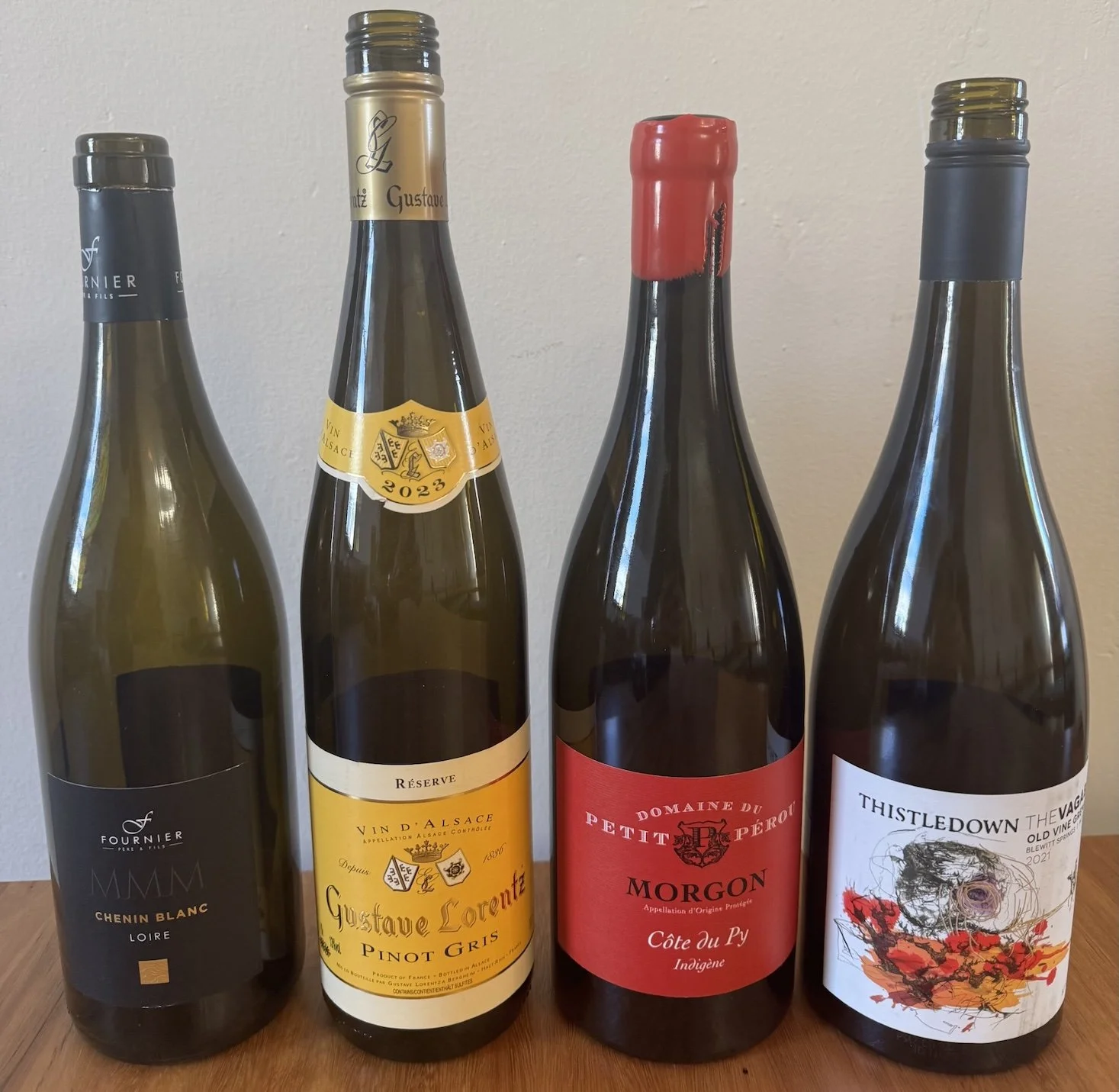
Premier Wine Tastings’ Jim Mullany recently hosted a Sommeliers Australia blind wine tasting event at Melbourne’s Cardwell Cellars in Richmond. The tasting consisted of four diverse bottles, two white and two red.
Contrast is useful when tasting wines together. It helps make the differences between various wine styles more apparent. For example, the imposing structure of a tannic variety such as Cabernet Sauvignon or Aglianico is easier to notice when tasted next to a silky Pinot Noir. The bottles for the June tasting were selected with this idea in mind. A contrast in acidity and body was the focus for the whites and a contrast in acidity and alcohol for the reds.
The White Wines:
The first white for the tasting was Fournier’s 2023 MMM Chenin Blanc from the Loire Valley (12% abv). It was crisp and flinty with a floral Jasmine lift and, while relatively straightforward, would make a refreshing aperitif. One of its defining features was its elevated acidity, which is a key characteristic of the variety. Some participants suggested that the wine was a Muscadet or Sancerre. These were both good calls given its restrained fruit profile and liveliness on the palate – not to mention the fact that the regions are also located in the Loire Valley. What could be ruled out, however, were lower acid varietals such as Viognier and Pinot Gris.
This set up the second white well, a dry 2023 Alsatian Pinot Gris by Gustave Lorentz (13%), with its counterpoint of lower acidity and a slightly broader, more generous and textured mouthfeel. The wine’s colour was deeper, partly a consequence of the variety’s pinkish skins. On the nose, it showed ripe apple, pear, honeysuckle and a musky spice. Having the Chenin next to it made the markedly lower acidity more obvious. Yet the acidity was sufficient to provide a balancing tension to the ripe fruit flavours, resulting in a versatile and gastronomic wine (which is also great value).
The Red Wines:
Both the reds tasted came from the 2021 vintage. In the case of the first, a Gamay from Beaujolais, this was a challenging and coolish year. The wine, Domaine du Petit Perou’s Morgon, Cote du Py, Indigene (13.5%), had perfumed aromatics with wild strawberry, red liquorice, black cherry and rose petals. Its tannins were firm and fine – influenced by the schist present in the distinguished vineyard. One taster correctly picked the wine as a Gamay, having detected a semi-carbonic note of bubble gum. Others were taken to Piemonte with the possibility of an approachable Langhe Nebbiolo raised – given the wine’s pale garnet appearance and sinewy structure. The flavours on the palate were layered, tangy and vibrant.
For the second red, Thistledown’s The Vagabond Old Vine Grenache from Blewitt Springs in McLaren Vale (14.5%), 2021 was a near-perfect vintage. Its nose was more brooding and herbal than the Beaujolais and displayed ripe red plum, strawberry, hoisin, thyme and black tea. The wine was intense, transparent and soulful, reflecting the old vines, site selection and delicate approach in the winery. Everyone correctly identified the wine as “New World” thanks to the more fruit forward style. Some proposed Central Otago Pinot Noir, however the acidity was lower than would be expected of most Pinots. This combined with the warming alcohol pointed to Grenache and set it apart from the Gamay. For all that, one can’t help relishing the days when McLaren Vale Grenache was referred to as “Australian Burgundy” in the UK over a century ago – as Thistledown’s Paddy Gilhooly recounted at a tasting last year.