Restorative Rayas: A Dinner
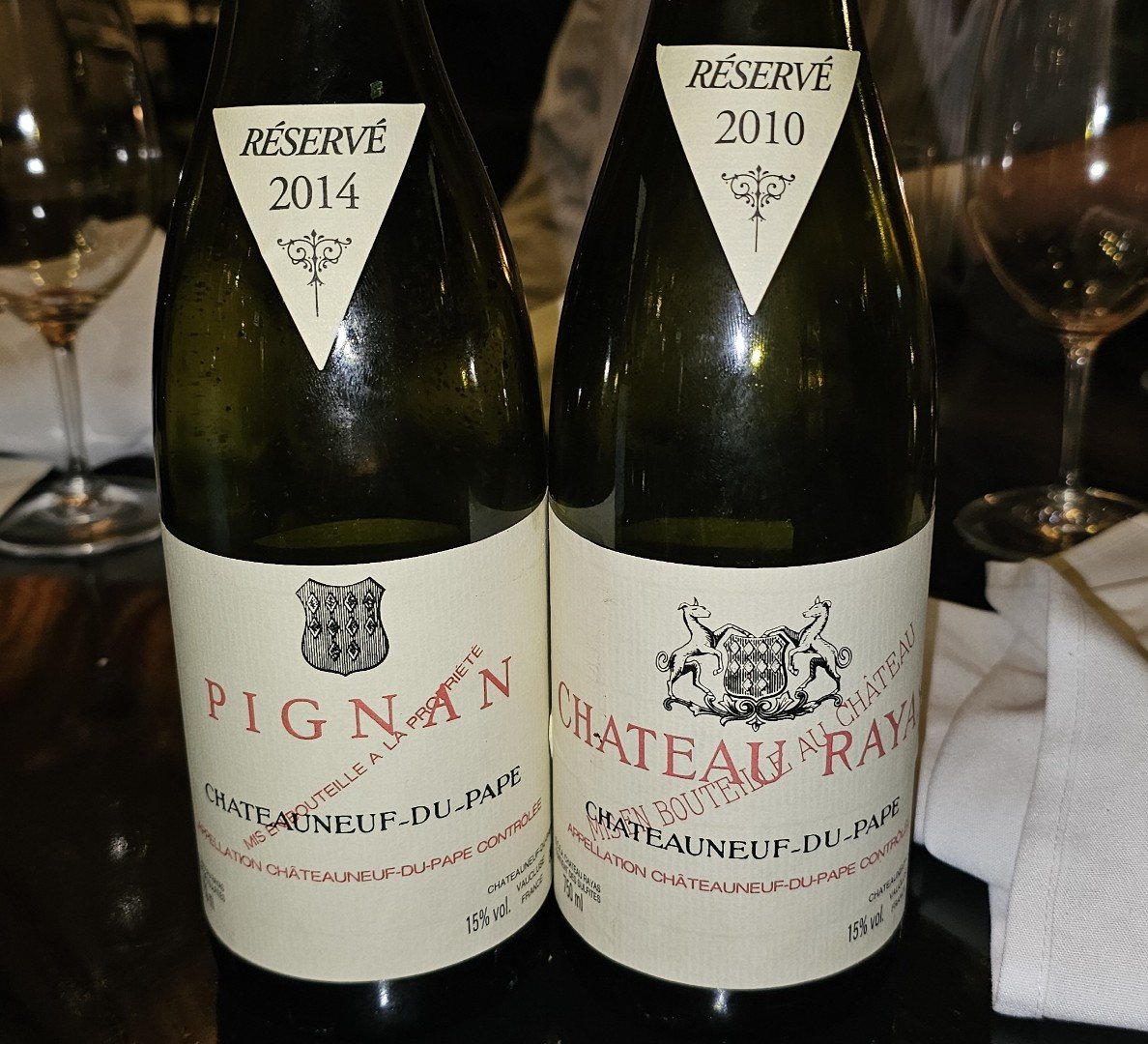
Earlier this week we had a very special Melbourne wine dinner, with two bottles from the revered Château Rayas – a 2014 Pignan and 2010 Rayas. Not only are these benchmarks for the Grenache variety and Châteauneuf-du-Pape AOC (wine writer William Kelley, in fact, says Rayas “transcends” the appellation), they are the product of a multigenerational family tradition and commitment to quality. It was a timely moment to open these bottles with Emmanuel Reynaud, the fourth-generation custodian, sadly passing late last year.
Château Rayas has a reputation for producing hauntingly beautiful, almost mythical, wines. What makes this estate, located in the northeastern part of Châteauneuf-du-Pape, so special? Maxime Lafont has explained in Laure Gasparotto and Jérôme Neutres’ book, Château Rayas, “I don’t claim to know the secret of Rayas’ unique and mysterious composition, but I believe three factors contribute to it: the sandy terroir in the middle of the woods to the north; a very late harvest, often in October; and an extremely low yield per hectare.” The galets roulés (large pebbles that absorb heat during the day and release it at night) for which Châteauneuf vineyards are well-known, are not to be found here. Nor are new oak barrels for that matter - winemaking is “traditional” with whole bunch fermentation in concrete vats and ageing in old casks.
The corks were pulled at 4pm for a slow oxidation before the 7pm dinner. Ideally, we would have opened the bottles even earlier, with the wines being said to benefit from a long rest period before service (the story goes that, one Christmas, Emmanuel Reynaud opened a 2006 Rayas a full week in advance!)
We started with Jean-Luc Jamet’s 2018 Couzou, Côtes-du-Rhône Blanc, a blend of Marsanne, Roussanne and Viognier, which was appetising, floral and textural. Then came the 2014 Pignan to be served with entrées. Importantly, this is not a “second wine” of Château Rayas but rather another Châteauneuf-du-Pape from a separate two-hectare block on the property with less sandy soils. It is made in the same way as Rayas and, like Rayas, is 100% Grenache.
The first impression of the Pignan was ripe red fruit. It showed strawberry, fig and woody herbs, together with a wild peppermint note. For another taster, this came across as pine, reflecting the pine trees that surround the Pignan block. There was also a pleasant subtle dried hay aroma that I took to be an influence from the whole bunch fermentation. The wine was fragrant, potent and seductive and moved us to silence. I asked if anyone present would have picked the wine as a Burgundy if tasted blind. If it was purely based on the aromatics then yes, it was possible. There was, however, a distinct warming sensation on the back-end of the palate from the 15% alcohol, which pointed away from Burgundy. While high abvs like this can be problematic, it did not detract from the wine at all. On the contrary, it added to its character and was part of its story – reflecting the variety, terroir and “late picking” philosophy of the estate. The concentrated fruit provided flesh and texture on the palate, which balanced the alcohol perfectly. It was a wine of transparency and harmony – and stole the show for me.
Whereas 2014 offered vibrant and radiant fruit according to Reynaud in Rayas, 2010 produced a powerful, concentrated and explosive wine, requiring “long ageing to fully reveal the scale of its complexity.” This proved to be the case here. The 2010 Rayas was deeper coloured, more brooding and darker fruited, with strawberry, blackberry and soy. If the Pignan hinted at Burgundy on the nose there was a primal element here, reminiscent of the Northern Rhône. You could, nevertheless, clearly see the connection between the two wines and that they were siblings. The palate was fuller and more glycerol with the intense fruit enveloping the more notable tannins. Its finish displayed remarkable drive and a resurgent acidity. The wine was a monument. It clearly could be (and was) enjoyed now, but it has so much further to go. One to revisit in a decade!